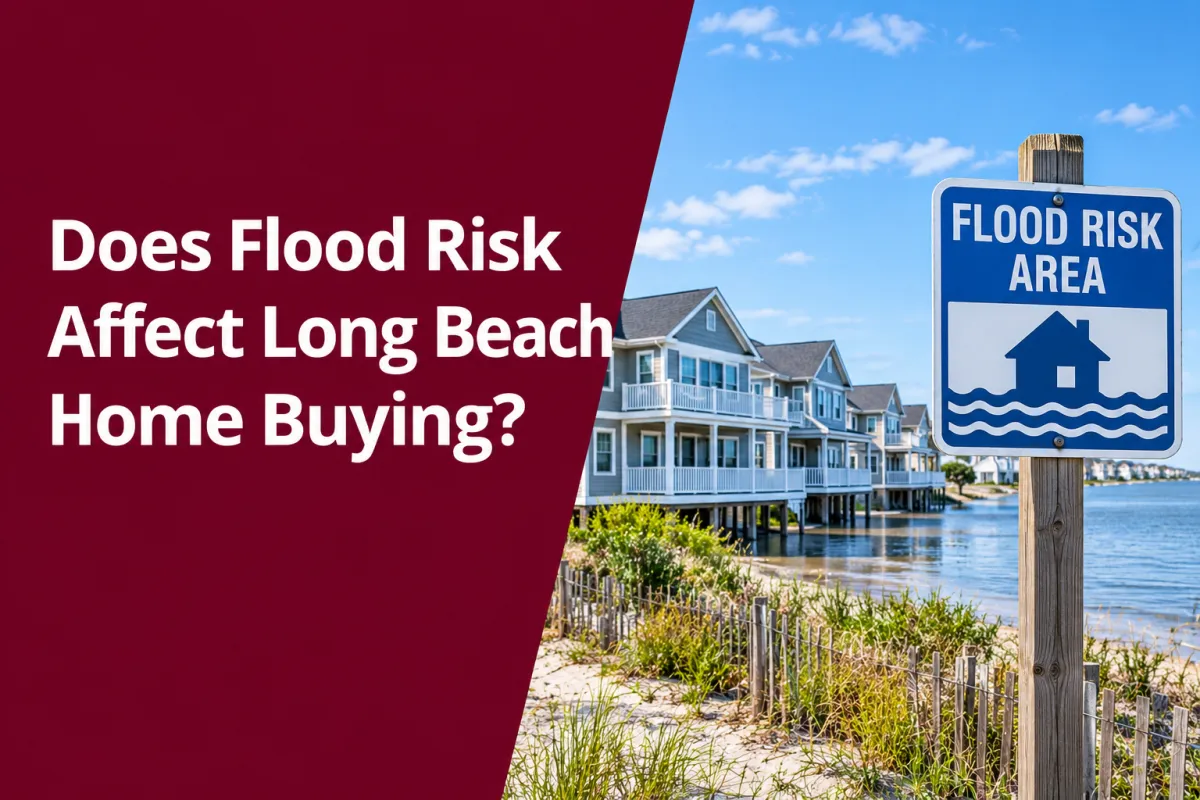
Does Flood Risk Affect Long Beach Home Buying?
Buying a home in Long Beach can involve more than comparing bedrooms, bathrooms, neighborhood feel, and the overall layout. For some properties, another question deserves attention early in the process: Could flood risk affect the home you are considering?
The answer depends on the specific property. Long Beach has designated flood-hazard areas, and the city provides flood-zone maps that buyers can use to investigate an individual address. That makes flood information an important part of property due diligence rather than something to discover after making a decision.
For buyers working with a Realtor in Long Beach, understanding what to check can make the home search more informed. Joe Manjarrez and The Manjarrez Group serve Long Beach along with Norwalk, Whittier, Downey, Montebello, and Lakewood, giving local buyers a resource for discussing property-specific questions throughout the search.
Start With the Address, Not a General Assumption
One of the easiest mistakes a buyer can make is assuming that every property in a coastal city carries the same flood considerations.
That is not how flood mapping works.
Long Beach official flood information identifies different mapped areas, including special flood hazard areas and other flood areas. The city's map includes zones such as A, AE, AH, VE, and X, with different characteristics and requirements.
Because conditions can differ from one property to another, buyers should investigate the specific address rather than making a decision based only on the neighborhood name.
This can be especially important when two homes seem similar on paper but have different mapped flood considerations.
What Should a Long Beach Buyer Actually Check?
Flood risk should be treated as one part of the larger property review.
When evaluating a home, consider several questions:
Is the property located within a mapped flood-hazard area?
What does the applicable flood map show for the address?
Could flood insurance be required?
Are there existing documents related to elevation or previous flood-related improvements?
Are there property modifications that should be discussed with the appropriate city department?
Could flood considerations affect the property's ongoing ownership costs?
These questions do not automatically mean a property should be avoided. Instead, they help you understand what you are buying.
The City of Long Beach specifically recommends checking whether a property is in a flood-hazard area and provides access to flood maps for that purpose.
Flood Insurance Is a Separate Question From Homeowners Insurance
Insurance is another reason buyers should investigate flood information before purchasing.
According to the City of Long Beach, standard homeowners insurance policies do not cover flood losses. The city participates in the National Flood Insurance Program, and flood insurance is available to owners of insurable property in Long Beach. The city also notes that flood insurance can be required in certain circumstances.
That means a buyer should not simply assume that a regular homeowners policy answers every question about flood-related protection.
Before committing to a property, discuss insurance requirements and available coverage directly with an appropriately licensed insurance professional.
The cost and availability of coverage can be property-specific, so obtaining information for the actual home is more useful than relying on a general estimate.
Why the Flood Map Matters During Your Home Search
A flood map is more than a document to review after you have already chosen a property.
It can help you identify questions early.
For example, if a property falls within a mapped flood-hazard area, you may want to investigate insurance, elevation information, building requirements, and other property considerations before moving forward.
The City of Long Beach states that its effective flood maps show the 100-year floodplain based on FEMA-adopted Flood Insurance Rate Maps. It also notes that maps can change as FEMA revises its information.
This is why a buyer should use current official information for the property being considered.
Don't Stop at the Flood-Zone Label
A flood-zone designation is useful, but it should not be treated as the entire property story.
The home's construction, improvements, elevation information, drainage conditions, and other characteristics may also matter.
Long Beach provides additional resources covering building in flood zones, property protection, storm drainage, flood warnings, and related subjects.
For buyers, this creates a practical approach: identify the mapped zone, understand what it means, and then investigate the property-specific details that may affect ownership.
If a home has undergone substantial remodeling or other construction, city requirements may also become relevant. Long Beach's Building and Safety information states that an elevation certificate is required for certain new buildings and major remodeling projects located in a flood zone.
How a Realtor Can Help You Ask Better Questions
A Top Realtor in Long Beach does more than arrange showings.
A good home search involves identifying questions that deserve professional follow-up.
When flood risk is part of the discussion, your Realtor can help you organize the property information you need, communicate questions to the appropriate parties, and keep flood considerations in perspective alongside location, condition, layout, and your overall home-buying goals.
The Realtor does not replace an insurance professional, city official, inspector, attorney, or other specialist. Instead, the Realtor can help coordinate the home-buying process so important questions are not overlooked.
For buyers working with Joe Manjarrez, this local perspective can be useful when comparing homes throughout Long Beach and the surrounding communities served by The Manjarrez Group.
What About Homes Near the Coast?
Long Beach's location makes flood research particularly relevant for some properties.
The city's hazard information identifies coastal flood-hazard areas, including VE zones, which are associated with coastal flooding and additional wave-related hazards. Other mapped areas include AE zones and different categories of X zones.
That does not mean every home near the coast has the same level of flood exposure.
Instead, it reinforces the importance of looking at the actual property and its official mapping information.
A buyer interested in a coastal Long Beach property should ask questions early rather than waiting until the final stages of the transaction.
A Simple Way to Include Flood Risk in Your Buying Process
You do not need to make flood research complicated.
A practical sequence is:
First, identify the property.
Get the exact address of the home you are considering.
Next, check official flood information.
Use the City of Long Beach resources and FEMA flood mapping information to understand the property's mapped status.
Then, investigate insurance.
Ask an insurance professional whether flood coverage is recommended or required and what options are available.
After that, review property-specific information.
Ask appropriate professionals about elevation documents, improvements, drainage, permits, or other issues that may be relevant.
Finally, consider the information alongside everything else.
Flood risk is one part of a larger home-buying decision that can also include location, condition, layout, neighborhood preferences, financing, and long-term plans.
What Buyers Should Remember About Long Beach Flood Risk
The most important takeaway is simple: do not guess about flood risk from appearance or location alone.
A home can look perfectly ordinary while still having a flood-zone designation that deserves investigation. At the same time, a flood-related designation does not by itself tell you everything about the property.
Long Beach provides official flood-zone resources and encourages property owners and buyers to determine whether a specific property is located in a flood-hazard area.
For buyers, the goal is not to create unnecessary concern. It is to gather the right information before making a major purchase.
FAQs About Flood Risk and Long Beach Home Buying
Does every Long Beach home have the same flood risk?
No. Flood considerations can vary by property. Official flood maps identify different mapped areas, so buyers should check the specific address rather than making assumptions about the entire city.
Does standard homeowners insurance cover flooding?
The City of Long Beach states that standard homeowners insurance policies do not cover losses caused by floods. Buyers should discuss flood coverage with a licensed insurance professional.
Where can I check whether a Long Beach home is in a flood zone?
The City of Long Beach provides flood-zone information and directs property owners and buyers to its flood maps and the FEMA Flood Map Service Center for property-specific information.
Can flood-zone information affect remodeling plans?
It can. Long Beach Building and Safety information says certain new buildings and major remodeling projects in flood zones require an elevation certificate. Buyers planning significant improvements should verify applicable requirements before beginning work.
Should I avoid buying a home because it is in a flood zone?
A flood-zone designation is one property consideration, not a complete answer about whether a home fits your needs. Buyers should understand the property's mapped status, insurance considerations, building requirements, and other relevant details before making their decision.
Looking at Long Beach Real Estate With More Confidence
Buying a Long Beach home means looking beyond the first impression. Flood information is one of the property details that can become important when evaluating certain homes, particularly when insurance, construction, or location-specific considerations are involved.
With the right questions and current property information, buyers can make their home search more informed.
If you are exploring Long Beach real estate or comparing homes in Norwalk, Whittier, Downey, Montebello, or Lakewood, Joe Manjarrez and The Manjarrez Group can help you navigate the local home-buying process and identify the property questions worth asking before you move forward.